From the blog
Yin Yoga vs. Vinyasa: Understanding the Key Differences
Yin Yoga vs. Vinyasa: The Key Differences Explained
Yin Yoga and Vinyasa are opposite ends of the yoga spectrum: Yin holds passive floor poses for 3–5 minutes to target connective tissue, while Vinyasa links breath-synchronized movements to build heat, strength, and cardiovascular fitness. Choosing between them depends on your recovery needs, fitness goals, and how your nervous system responds to stillness versus motion.
What Is Yin Yoga?
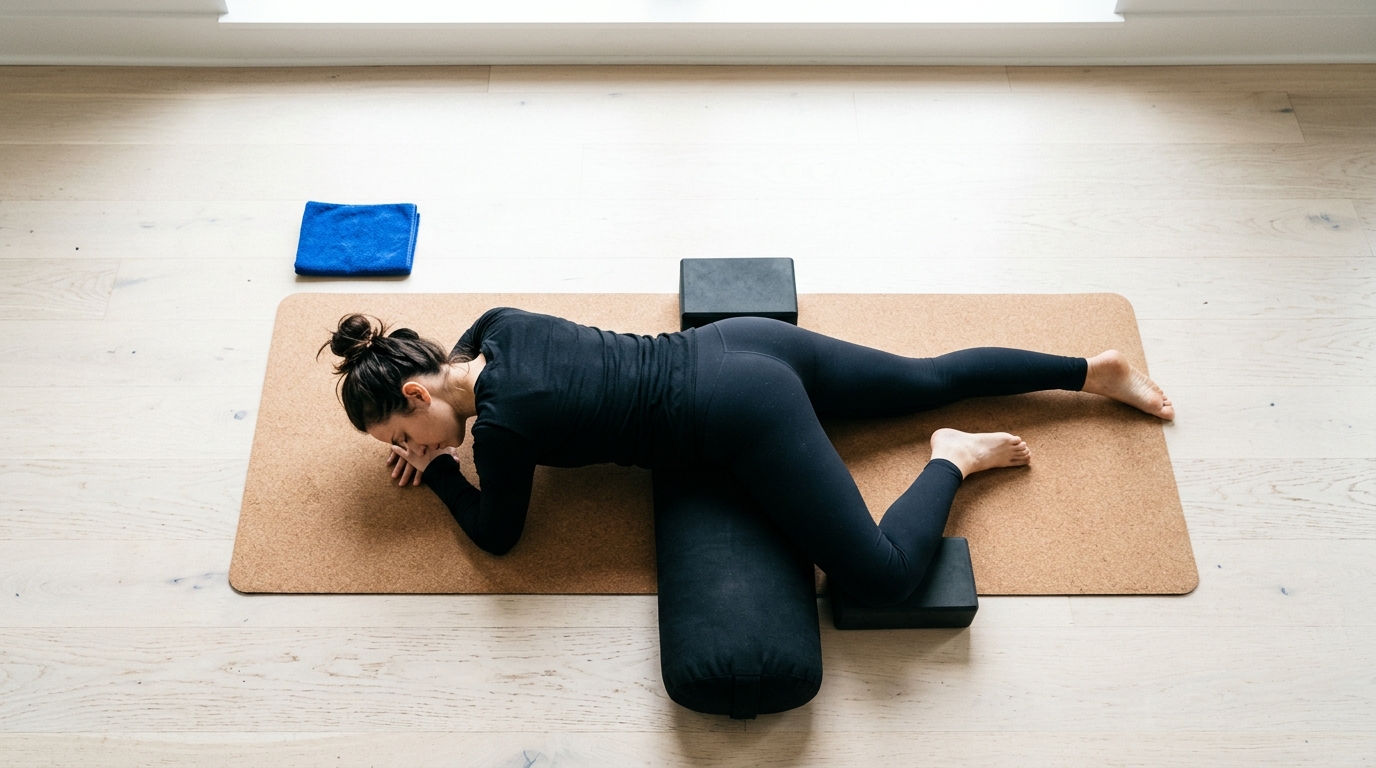
Yin Yoga is a slow, meditative practice developed in the late 1970s by martial arts expert Paulie Zink and later popularized by teachers Paul Grilley and Sarah Powers. Poses - called "shapes" - are held for anywhere from 3 to 10 minutes, sometimes longer. The practitioner stays passive, meaning muscles are deliberately relaxed so that stress reaches deeper layers: fascia, ligaments, joint capsules, and bones.
The theoretical backbone draws from Traditional Chinese Medicine. Practitioners work along meridian lines - energetic pathways associated with organ health - to promote the flow of qi (life force). The long holds create a gentle, sustained load on connective tissue, which responds and adapts far more slowly than muscle does. Think of it as a practice for the body's hidden architecture.
Common Yin poses include Dragon (a deep lunge), Butterfly (seated forward fold with soles together), Sleeping Swan (a floor version of Pigeon), and Saddle (a supported backbend targeting the quadriceps and lumbar spine). Props - blocks, bolsters, and blankets - are standard tools, not signs of limitation.
What Is Vinyasa Yoga?
Vinyasa - from the Sanskrit word meaning "to place in a special way" - is a dynamic, flow-based style where poses connect seamlessly through breath. Each inhale and exhale cues a movement. A Sun Salutation is the archetypal Vinyasa sequence: Mountain Pose, Forward Fold, Plank, Chaturanga, Upward Dog, Downward Dog, and back again. Classes typically run 45–75 minutes and feel more like an athletic workout than a meditation session.
Vinyasa emerged from the Ashtanga tradition taught by K. Pattabhi Jois in Mysore, India. While Ashtanga uses a fixed sequence, Vinyasa teachers sequence freely, allowing creative variation class to class. The continuous movement generates internal heat - referred to in Sanskrit as tapas- which warms muscles, increases flexibility through active range of motion, and elevates heart rate into aerobic zones.
Vinyasa targets skeletal muscle strength, cardiovascular endurance, balance, and coordination. It also builds body awareness through real-time proprioceptive feedback - you have to know where your limbs are when you're moving fast.
Yin Yoga vs. Vinyasa: 7 Key Differences
Factor Yin Yoga Vinyasa Yoga Pace Slow; 3–10 min holds per pose Fast; poses change breath-to-breath Primary tissue targeted Fascia, ligaments, joint capsules Skeletal muscle Muscle activation Passive (muscles relaxed) Active (muscles engaged) Heart rate Low; parasympathetic dominant Moderate to high; aerobic zones Primary benefits Joint mobility, stress reduction, recovery Strength, endurance, flexibility, coordination Philosophical influence Taoism, Traditional Chinese Medicine Ashtanga lineage, classical Hatha Best for Recovery days, anxiety, tight hips/spine Fitness building, weight management, energyPhysical Benefits: Where Each Practice Excels
Yin Yoga Physical Benefits
- Connective tissue hydration: Long holds stimulate synovial fluid production, lubricating joints and reducing stiffness - particularly relevant for anyone sitting at a desk 8+ hours per day.
- Spinal decompression: Shapes like Caterpillar and Dragon Flying Low decompress lumbar vertebrae in ways that upright movement cannot.
- Nervous system downregulation: Sustained stillness activates the parasympathetic branch of the autonomic nervous system, measurably lowering cortisol response and heart rate variability scores.
- Improved range of motion: A 2025 study published in the Journal of Bodywork and Movement Therapies found that 8 weeks of twice-weekly Yin Yoga increased hip flexion range by an average of 14 degrees in sedentary adults.
Vinyasa Yoga Physical Benefits
- Muscular strength: Holding Chaturanga, Warrior III, and Crow Pose builds functional upper-body and core strength comparable to bodyweight training circuits.
- Cardiovascular conditioning: A brisk Vinyasa class sustains heart rate at 55–75% of maximum - solidly within the aerobic training zone - for 30–50 continuous minutes.
- Dynamic flexibility: Active stretching through full ranges of motion trains muscles to be strong in lengthened positions, reducing injury risk in sport and daily movement.
- Caloric expenditure: A 60-minute vigorous Vinyasa session burns approximately 400–550 calories for a 155-pound practitioner, making it a legitimate cardiovascular modality.
Mental and Emotional Dimensions
Yin Yoga is, bluntly, harder for many people than Vinyasa - not physically, but psychologically. Staying still for 5 minutes in a mildly uncomfortable stretch while the mind races trains tolerance of discomfort, emotional regulation, and present-moment awareness. Many practitioners report that Yin surfaces stored emotional tension in ways that faster practices don't. Teachers often describe it as "meditation with shapes."
Vinyasa, by contrast, channels mental energy outward and into movement. The cognitive demand of following a sequence, staying with breath, and transitioning safely creates a focused flow state - the same neurological phenomenon athletes describe as being "in the zone." For people whose anxiety responds better to moving the body than sitting with it, Vinyasa is often the more accessible entry point to mindfulness.
Neither approach is superior. They address different psychological needs at different times.
Who Should Practice Which Style?
Choose Yin Yoga if you:
- Are recovering from high-intensity training or athletic competition
- Experience chronic tightness in hips, lower back, or shoulders from prolonged sitting
- Struggle with anxiety, insomnia, or a chronically activated stress response
- Want to deepen meditation practice through a physical anchor
- Are managing hypermobility carefully - note that Yin requires mindful edge-finding, not maximum range
Choose Vinyasa if you:
- Want to build strength and cardiovascular fitness simultaneously
- Are looking for an energizing morning or midday practice
- Prefer variety and creativity in your movement sessions
- Are new to yoga but come from an athletic or movement background
- Want to manage weight as part of a broader lifestyle strategy
Can You Practice Both?
Absolutely - and the combination is arguably ideal. Vinyasa builds the muscular strength and heat that keeps joints stable; Yin restores the connective tissue flexibility and nervous system calm that prevents burnout and overuse injury. Many serious practitioners structure their week with 2–3 Vinyasa sessions and 1–2 Yin sessions, treating them as complementary rather than competing.
A practical weekly structure: Vinyasa on Monday, Wednesday, and Friday; Yin on Tuesday and Sunday. This mirrors the work-recovery principle used in strength training and endurance sports - you only adapt during rest, not during the stimulus itself.
Yin Yoga Vs Vinyasa FAQ
Is Yin Yoga suitable for beginners?
Yes. Yin Yoga requires no prior yoga experience. The slow pace and use of props make poses accessible regardless of flexibility level. The primary skill it develops - tolerating stillness - is one most people need to build, not one they arrive with.
Is Vinyasa too intense for older adults?
Not inherently. Many Vinyasa teachers offer modifications for every pose, and a well-taught class scales to the individual. That said, older adults with joint concerns often benefit from starting with a Hatha or slower-flow class before moving into faster-paced Vinyasa sequences.
Can Yin Yoga replace stretching after a Vinyasa class?
It can function similarly, but they aren't identical. Post-Vinyasa static stretching targets warm, pliable muscle. Yin, practiced on cool or cold tissue, stresses fascia and joint structures directly. A short 10–15 minute Yin cool-down after Vinyasa is a legitimate and popular hybrid approach.
Does Yin Yoga build any muscle?
Minimal muscle hypertrophy occurs in Yin because muscles are deliberately relaxed. However, the practice does strengthen the connective tissue framework that supports muscle function, and some Yin shapes require low-grade isometric engagement to hold safely at the joint.
Which style burns more calories?
Vinyasa burns significantly more calories - approximately 400–550 per hour versus 150–200 for Yin, depending on body weight and class intensity. Yin's value is not caloric expenditure; it lies in recovery, mobility, and nervous system regulation, which support long-term consistency in higher-intensity training.
