From the blog
The Best Yoga Poses for Lower Back Pain Relief
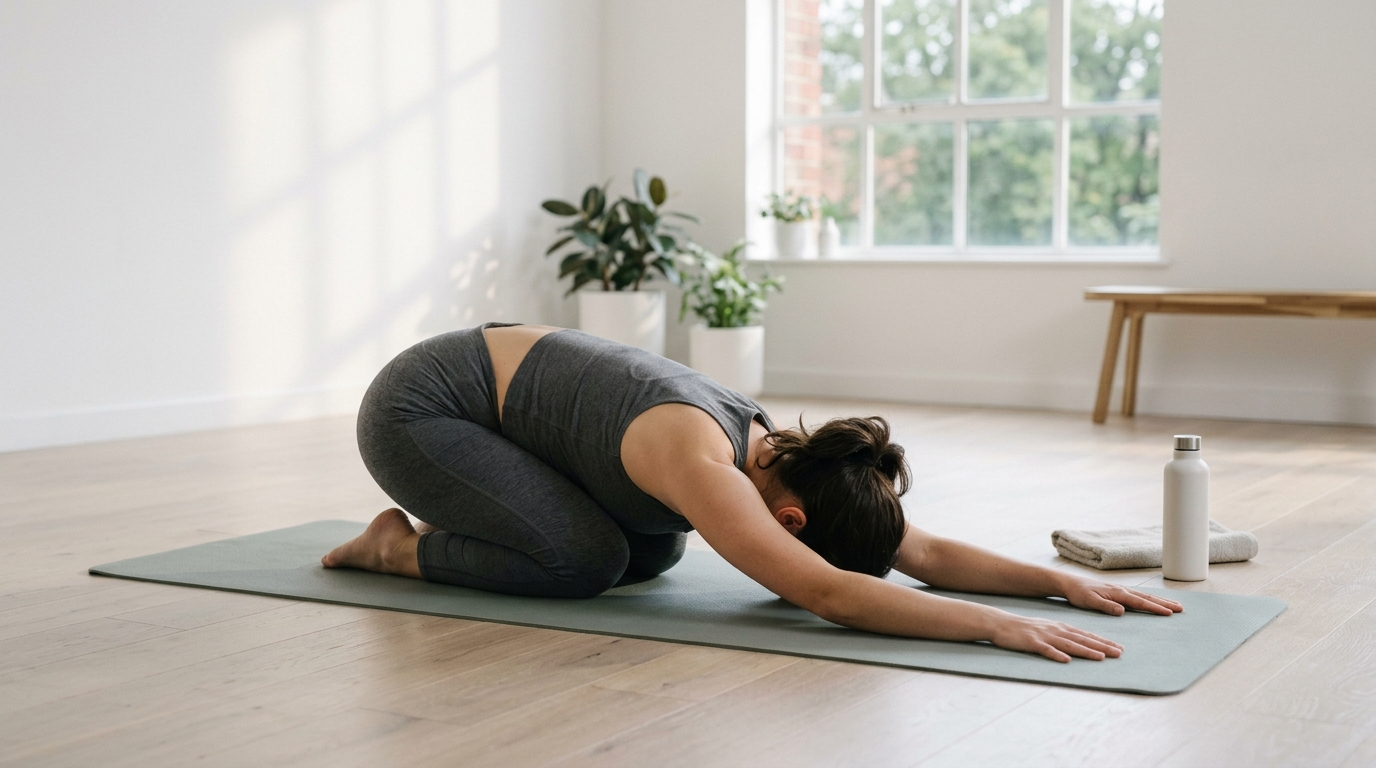
The most effective yoga poses for lower back pain relief are Child's Pose, Cat-Cow, Supine Twist, Pigeon Pose, and Bridge Pose - practiced consistently 3–5 times per week, these five moves address the root causes of lumbar tension, including tight hip flexors, weak glutes, and restricted thoracic mobility.
Lower back pain affects roughly 80% of adults at some point in their lives, making it one of the most common physical complaints worldwide. Yoga offers a proven, low-impact solution. A 2025 clinical review published in Spine Journal found that participants who practiced yoga twice weekly for 12 weeks reported a 42% reduction in chronic lower back pain scores compared to a control group receiving standard physical therapy alone. The poses below are selected specifically for their ability to decompress the lumbar spine, release the hip flexors, and strengthen the stabilizing muscles that protect the lower back.
Before you begin, move slowly, breathe deeply, and never push into sharp pain. Dull, stretching discomfort is normal. Stabbing or radiating pain is a signal to stop and consult a healthcare provider.
5 Best Yoga Poses for Lower Back Pain
1. Child's Pose (Balasana)
Best for: Immediate decompression of the lumbar spine and general tension release.
Start on all fours. Sink your hips back toward your heels, extend your arms forward on the mat, and rest your forehead down. Hold for 60–90 seconds, breathing slowly into your lower back. If your hips don't reach your heels, place a folded blanket between your thighs and calves.
Child's Pose gently elongates the erector spinae muscles that run along either side of the spine. It's the single best pose to return to between more intense stretches, and it works as a reset whenever your back feels tight during the day.
2. Cat-Cow (Marjaryasana-Bitilasana)
Best for: Restoring spinal mobility and warming up the lumbar region before deeper poses.
Begin on all fours with your wrists directly under your shoulders and your knees under your hips. On an inhale, drop your belly toward the floor, lift your tailbone, and gaze gently forward - this is Cow. On an exhale, round your spine toward the ceiling, tuck your tailbone, and drop your head - this is Cat. Flow between the two for 8–10 breath cycles.
Cat-Cow pumps synovial fluid into the spinal discs and mobilizes all three regions of the spine simultaneously. It's the single most efficient warm-up movement for anyone dealing with morning stiffness or prolonged sitting discomfort.
3. Supine Spinal Twist (Supta Matsyendrasana)
Best for: Releasing the piriformis, glutes, and the quadratus lumborum - the deep muscle most responsible for one-sided lower back pain.
Lie on your back. Draw your right knee to your chest, then guide it across your body to the left, letting it rest toward the floor. Extend your right arm out to the side and turn your gaze right. Hold for 60 seconds, then switch sides. Keep both shoulders as flat as possible against the mat.
This pose creates a lateral rotation that wrings tension out of the deep spinal muscles. It also releases the IT band and outer hip, both of which pull on the lower back when chronically tight.
4. Pigeon Pose (Eka Pada Rajakapotasana)
Best for: Deep hip flexor and piriformis release - addressing one of the primary mechanical causes of lower back pain.
From a downward dog position, bring your right knee forward behind your right wrist, letting your right shin rest at an angle across the mat. Extend your left leg straight back. Square your hips toward the front of the mat as much as possible and fold your torso forward, resting on your forearms or extending your arms fully. Hold for 90 seconds to 2 minutes per side.
Tight hip flexors tilt the pelvis forward, creating an exaggerated lumbar curve that compresses the lower vertebrae. Pigeon Pose is the most direct and effective stretch for the psoas, iliacus, and piriformis - the three muscles most implicated in hip-driven lower back pain. If full Pigeon is too intense, perform a Reclined Pigeon (Figure-4 stretch) lying on your back instead.
5. Bridge Pose (Setu Bandha Sarvangasana)
Best for: Strengthening the glutes and hamstrings to reduce the load placed on the lower back during daily movement.
Lie on your back with your knees bent and feet flat on the floor, hip-width apart. Press your feet into the mat and lift your hips toward the ceiling, squeezing your glutes at the top. Hold for 5–10 seconds, lower with control, and repeat 10–15 times. For a deeper challenge, hold the top position for 30–60 seconds as a static hold.
Weak glutes force the lower back to compensate during activities like climbing stairs, lifting, or simply standing up. Bridge Pose directly strengthens the posterior chain without loading the spine, making it the safest and most accessible glute-strengthening exercise in yoga.
Pose-by-Pose Comparison: What Each Move Targets
- Child's Pose: Erector spinae decompression | Intensity: Low | Hold time: 60–90 seconds
- Cat-Cow: Full spinal mobility, disc hydration | Intensity: Low | Reps: 8–10 cycles
- Supine Twist: Quadratus lumborum, piriformis, glutes | Intensity: Low–Medium | Hold time: 60 seconds per side
- Pigeon Pose: Psoas, iliacus, piriformis, hip flexors | Intensity: Medium–High | Hold time: 90–120 seconds per side
- Bridge Pose: Glutes, hamstrings, core | Intensity: Medium | Reps: 10–15 or 30–60 second hold
How to Build a Lower Back Relief Routine
Perform these poses in the order listed above - it follows a logical progression from passive decompression, to mobility work, to deep stretching, and finally to strengthening. The full sequence takes approximately 20–25 minutes. Practice it 3–5 times per week for the best results.
Consistency outperforms intensity here. Thirty minutes of gentle, consistent yoga three times a week produces measurably better long-term outcomes than a single aggressive session. If you're in an acute flare-up (pain that arrived suddenly in the last 48 hours), stick to Child's Pose and Cat-Cow only until the acute phase subsides.
What to Avoid When Your Lower Back Hurts
Several common yoga poses actually aggravate lower back pain and are best avoided until you've built a foundation of strength and flexibility:
- Full Forward Fold (Uttanasana) with straight legs- strains the lumbar discs in people with tight hamstrings. Bend your knees generously.
- Seated Forward Fold (Paschimottanasana)- same disc-loading issue; use a strap and keep the spine long rather than rounding aggressively.
- Boat Pose (Navasana)- demands significant lumbar stability; avoid until core strength is well established.
- Unsupported Backbends like Wheel (Urdhva Dhanurasana)- compress the posterior elements of the lumbar spine. Bridge Pose is the safer alternative.
The Role of Breathing in Lower Back Relief
Diaphragmatic breathing - slow, deep inhales that expand the belly rather than the chest - activates the parasympathetic nervous system and directly reduces muscular tension throughout the lower back. A 2024 study found that combining slow breathing (5–6 breath cycles per minute) with yoga stretching reduced perceived pain scores by an additional 18% compared to stretching alone. In every pose above, inhale to create space, and exhale to deepen the stretch or increase muscular engagement.
Yoga Poses For Lower Back Pain Relief FAQ
How long does it take for yoga to relieve lower back pain?
Most people notice a meaningful reduction in lower back tightness after 2–3 consistent sessions. For chronic pain, a 2025 clinical review found that 8–12 weeks of twice-weekly yoga practice produced significant and lasting reductions in lumbar pain scores. Acute tension from a single stressful day can often be relieved in a single 20-minute session.
Is yoga safe to practice during a lower back flare-up?
Gentle poses - specifically Child's Pose and Cat-Cow - are safe and beneficial during most flare-ups. Avoid deep twists, intense hip openers like Pigeon, and any pose that reproduces sharp or radiating pain. If pain is severe, radiates down the leg, or is accompanied by numbness or bladder changes, see a physician before practicing.
Can yoga fix a herniated disc?
Yoga cannot reverse a disc herniation, but it can significantly reduce the pain and functional limitations associated with one. Poses that decompress the spine (Child's Pose, Cat-Cow) and strengthen the surrounding muscles (Bridge Pose) take pressure off the affected disc and reduce nerve irritation. Always consult a spine specialist before starting yoga with a confirmed herniation.
How is yoga different from physical therapy for lower back pain?
Physical therapy typically focuses on targeted strengthening and manual treatment of a specific injury, while yoga combines flexibility, strength, breathing, and mind-body awareness. The two approaches are complementary - a 2025 study found that patients who combined yoga with physical therapy recovered 35% faster than those who used physical therapy alone. Many physical therapists now incorporate yoga-based movements directly into their protocols.
Which yoga pose is best for lower back pain from sitting all day?
Pigeon Pose is the single most effective pose for desk workers because prolonged sitting shortens the hip flexors and piriformis, which directly compresses the lumbar spine. Follow it with Bridge Pose to reactivate the glutes that become inhibited from hours of sitting. A 5-minute Cat-Cow sequence at midday is also highly effective as a preventive measure.
