From the blog
How to Build a Home Yoga Practice You'll Actually Stick To
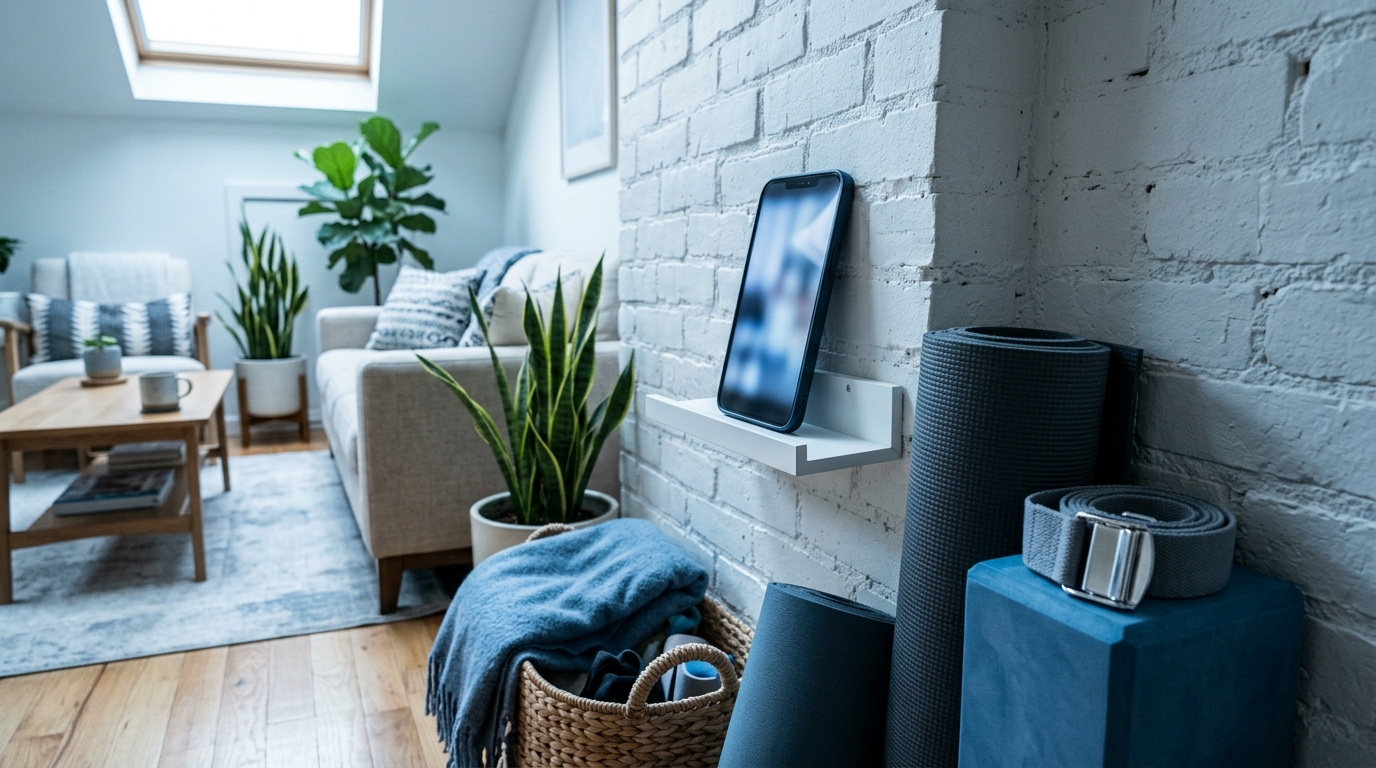
A sustainable home yoga practice comes down to three non-negotiables: a consistent time slot, a dedicated physical space, and a progressive structure that grows with you. Skip any one of these and you'll be back to sporadic mat-rolling within three weeks.
Most people fail at home yoga not because they lack discipline, but because they design it wrong from the start. They try to replicate a studio class in their living room, get bored or confused without a teacher present, and quietly quit. This guide fixes that.
Step 1: Pick Your Time and Protect It Like a Meeting
Research consistently shows that habit formation accelerates when a new behavior is anchored to an existing one - a concept called habit stacking. Choose a time that already has structure around it: right after your morning coffee, immediately after the kids leave for school, or in the 20-minute window before your first work call.
Two rules that matter here:
- Start with 20 minutes, not 60. A 20-minute practice you do five days a week beats a 60-minute practice you do once. Neurologically, frequency builds the habit; duration builds the skill.
- Block it in your calendar with a title. "Yoga – 7:00 AM" on your calendar has the same psychological weight as a work meeting. Treat it accordingly.
Step 2: Build a Dedicated Space (It Doesn't Need to Be a Whole Room)
You need a space where your mat can live unrolled, or where you can roll it out in under 60 seconds. The longer it takes to set up, the higher the friction, and friction kills habits.
A 6-foot by 4-foot area is enough for a full standing, seated, and supine practice. Clear a corner of your bedroom, a section of your living room, or a spot in your garage. Add three specific items:
- A quality mat. A 4mm or 6mm thick non-slip mat makes a measurable difference in joint comfort during kneeling and balancing postures. Brands like Manduka PRO, Liforme, and Jade Harmony are worth the investment at this stage.
- Two yoga blocks. These aren't just for beginners. Advanced practitioners use blocks to deepen poses. Cork blocks are more stable under weight; foam blocks are lighter and easier to grip.
- A yoga strap. One 8-foot strap eliminates the frustration of inflexibility and lets you work in poses like seated forward folds and shoulder openers without straining.
If ambient cues help you, add a small candle, a diffuser, or even a specific playlist. These sensory signals train your brain to switch into "practice mode" faster each session.
Step 3: Choose a Structured Program, Not Random YouTube Videos
This is where most home practitioners go wrong. Randomly searching "yoga for beginners" on YouTube produces inconsistent results, no progressive overload, and zero accountability. You need a sequential program - one that builds poses, breathwork, and body awareness in a logical order.
In 2026, the most widely used structured home yoga platforms include:
- Yoga with Adriene (YouTube / App): Free, with named 30-day programs like "30 Days of Yoga" and "Dedicate" that have clear progression built in. Best for beginners and intermediate practitioners.
- Glo: Subscription-based, with teacher-led programs filtered by style (Hatha, Vinyasa, Yin, Restorative), duration, and difficulty. Strong filtering tools for building a custom plan.
- Alo Moves: Visually polished platform with programs from well-known teachers. Stronger on alignment coaching than most competitors.
- Down Dog App: AI-generated sequences that adapt to your level and available time. Best for people who want variety without randomness.
Pick one platform and commit to it for at least 30 days before switching. Platform-hopping creates the same problem as YouTube roulette.
Step 4: Understand the Four Yoga Styles and When to Use Each
Style Pace Primary Benefit Best Practice Time Hatha Slow to moderate Foundation alignment, breath awareness Morning or evening Vinyasa Moderate to fast Cardiovascular strength, flow state Morning or midday Yin Very slow (poses held 3–5 min) Deep connective tissue release, nervous system downregulation Evening or rest days Restorative Stationary with props Stress recovery, parasympathetic activation Evening or post-illnessA well-rounded weekly practice blends at least two of these styles. A sample week might look like: Vinyasa on Monday, Wednesday, and Friday; Yin on Tuesday and Thursday; Restorative on Sunday. That's five active sessions with intelligent recovery built in.
Step 5: Track Progress in a Way That Keeps You Motivated
Visible progress is fuel. The challenge with yoga is that gains are subtle - your warrior III steadies, your forward fold deepens by two inches, your breath in downward dog slows from frantic to controlled. You won't notice these shifts unless you document them.
Three tracking methods that work:
- Weekly video check-ins: Film yourself in three poses each week - a standing balance, a forward fold, and a backbend. Watching your month-one versus month-three video is genuinely motivating.
- A simple practice log: Date, duration, style, and one sentence about how you felt. Nothing more. Apps like Notion, Day One, or even a paper notebook work equally well.
- Pose milestone markers: Write down five poses you want to work toward - crow pose, standing splits, full wheel, side plank, seated forward fold with flat back. Check them off as they become accessible.
Step 6: Handle Missed Days Without Self-Sabotage
You will miss days. The variable is not whether you miss them - it's how you respond. Research on habit recovery consistently shows that missing one day has minimal impact on long-term habit formation. Missing two consecutive days significantly increases the probability of full abandonment.
Apply the "never miss twice" rule, popularized by habit researcher James Clear. One missed day is an accident. Two missed days is the start of a new (unwanted) habit. When you miss a session, the only task is to show up the next day - even for 10 minutes of breathwork on your mat.
Step 7: Add Community Accountability Without a Studio
Solo practice is sustainable long-term only with some form of external accountability. You don't need a studio membership for this. Effective options include:
- A WhatsApp or Signal group with 2–3 friends doing the same program
- Posting a weekly practice log publicly on Instagram or a fitness community like Reddit's r/yoga
- Booking a 30-minute monthly video check-in with a yoga teacher for alignment feedback
The specific format matters less than the social commitment it creates. When someone else knows you practice, you practice more consistently.
The Minimum Viable Practice for Busy Weeks
Life disrupts perfect schedules. Define your minimum viable practice in advance so you never have an excuse to do nothing. A defensible minimum looks like this:
- Child's pose - 1 minute
- Cat-cow - 10 rounds
- Downward-facing dog - 1 minute
- Seated forward fold - 1 minute each side
- Savasana - 2 minutes
That's 8 minutes. It keeps your streak alive, maintains your mat habit, and often leads to a longer practice once you've started.
How long does it take to build a consistent home yoga habit?
Research from University College London found that habit formation takes an average of 66 days, not the commonly cited 21. For yoga specifically, plan for a 60-day commitment before the practice feels automatic. Your first 30 days require active scheduling; your second 30 days start to feel like something you do rather than something you decide to do.
What's the best yoga style for complete beginners at home?
Hatha yoga is the most effective starting point for home beginners. Its slower pace gives you time to understand alignment cues, and poses are held long enough to feel their mechanics. After 4–6 weeks of Hatha, most practitioners can successfully transition into Vinyasa flow without feeling lost.
Do I need a yoga teacher if I'm practicing at home?
You don't need a full-time teacher, but one alignment check - a single 30-minute video session with a certified yoga instructor - early in your practice prevents compensatory movement patterns that cause injury later. After that, quality video programs provide sufficient guidance for most practitioners through intermediate level.
How many days per week should I practice yoga at home to see results?
Four days per week is the minimum threshold for measurable flexibility and strength improvements within 8 weeks. Five days per week accelerates neurological adaptations (balance, proprioception) noticeably faster. Six or seven days per week is sustainable only if you alternate between vigorous and restorative styles.
Can I lose weight or build muscle with a home yoga practice?
Yes to both, with specificity. Vinyasa and power yoga sessions sustaining 45–60 minutes produce meaningful caloric expenditure and muscular fatigue, particularly in upper body pressing and hip stabilizer muscles. A 2024 study published in the Journal of Bodywork and Movement Therapies found that practitioners completing three 60-minute Vinyasa sessions per week for 12 weeks showed statistically significant increases in upper-body muscular endurance. Combining yoga with adequate protein intake (1.6g per kg of bodyweight) supports visible muscle development over 3–6 months.
