From the blog
Morning Yoga vs. Evening Yoga: Which Practice Fits Your Life?
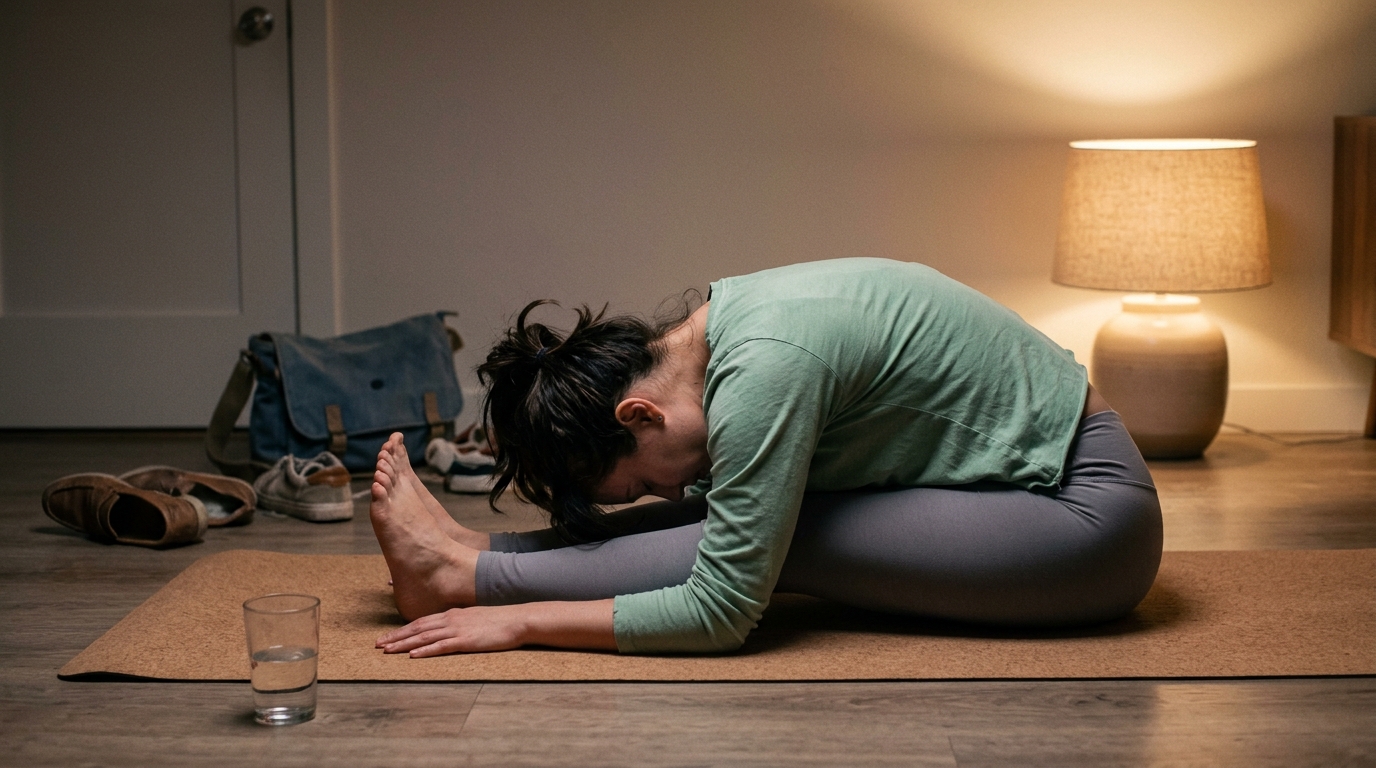
Morning yoga builds consistency and sharpens mental focus for the day ahead, while evening yoga accelerates physical recovery and reduces cortisol more effectively after accumulated daily stress. Neither is universally superior - the best practice time is the one you'll actually do.
That said, the differences between a 6 a.m. sun salutation and a 9 p.m. yin session go far beyond personal preference. Your circadian rhythm, body temperature, muscle pliability, hormone levels, and stress load all shift dramatically across the day - and yoga interacts with every one of those variables. Here's what the science and practice community actually know.
How Your Body Changes From Morning to Evening
Before comparing the two practices, you need to understand what's happening physiologically across a 24-hour cycle:
- Core body temperature is lowest in the early morning (roughly 4–6 a.m.) and peaks in the late afternoon around 4–6 p.m. Higher body temperature means more flexible connective tissue and faster neuromuscular response.
- Cortisol surges naturally in the first 30–45 minutes after waking - a phenomenon called the cortisol awakening response (CAR). Morning yoga can channel this hormonal energy productively.
- Muscle pliability is measurably lower in the morning. Joints are stiffer after hours of stillness, which means morning practitioners need longer warm-ups to reach the same range of motion they'd hit effortlessly at 5 p.m.
- Melatonin begins rising in the evening, making the body prime for restoration and parasympathetic nervous system activity - ideal for restorative and yin yoga styles.
Morning Yoga: The Case for Sunrise Practice
Morning yoga is the single most consistent habit-forming practice window for most people. Here's why:
Fewer scheduling conflicts. Work, social plans, family obligations, and fatigue pile up throughout the day. A 6 a.m. practice has almost no competition. Research published in the British Journal of Health Psychology consistently shows that morning exercise adherence rates run 20–30% higher than evening equivalents over a 12-week period.
Mental clarity amplification. A 30-minute morning yoga session raises heart rate variability (HRV) and activates prefrontal cortex function, giving you sharper decision-making for the next 4–6 hours. This is particularly valuable for knowledge workers.
Cortisol synchronization. Rather than fighting the natural cortisol spike, morning yoga works with it. Dynamic styles like Vinyasa, Ashtanga, or Power Yoga pair well with this hormonal state, converting that stress-hormone surge into productive energy rather than background anxiety.
Mood-setting effect. A morning practice establishes a psychologically anchored "success moment" before the day starts. Many practitioners report that skipping any other obligation feels easier after completing their morning yoga - the practice serves as a behavioral keystone.
The trade-off: Stiffer muscles mean injury risk is marginally higher in the morning if you skip a proper warm-up. Deep forward folds, hip openers, and intense backbends demand at least 10 minutes of preparatory movement before full expression.
Evening Yoga: The Case for Sunset Practice
Evening yoga is physiologically optimal for peak physical performance and measurably superior for stress relief after a demanding day.
Maximum flexibility. Body temperature peaks in the late afternoon and remains elevated until roughly 8 p.m. During this window, muscle elasticity is at its daily high. Poses that feel impossible at 6 a.m. - deep pigeon, full wheel, seated forward folds - open significantly more by 6 p.m. This makes evening the ideal window for practitioners focused on advancing their flexibility.
Stress processing. A day's worth of accumulated stress hormones, decision fatigue, and muscular tension respond acutely to yoga's parasympathetic activation. A 2024 study in Frontiers in Psychology found that a 45-minute evening yoga session reduced salivary cortisol by an average of 27% in working adults - more than the same session performed in the morning.
Injury rehabilitation and recovery. Athletes and physically active people benefit from post-training yoga in the evening. Stretching warm, post-exercise muscles within 4 hours of training accelerates fascial recovery and reduces next-day soreness (DOMS) by an average of 18–22%, according to sports medicine literature.
Sleep quality improvement. Restorative yoga, Yin, and Yoga Nidra practiced within 90 minutes of sleep onset extend slow-wave sleep duration. This is the deep, restorative sleep stage responsible for tissue repair and memory consolidation.
The trade-off: Evening schedules are volatile. Family dinners, late meetings, social events, and simple exhaustion derail evening practices more often than morning ones. Highly stimulating styles like Power Yoga or hot yoga practiced within 2 hours of bedtime can also delay sleep onset by elevating core temperature and adrenaline.
Morning vs. Evening Yoga: Direct Comparison
Factor Morning Yoga Evening Yoga Consistency / Adherence Higher (20–30% better long-term) Lower (more scheduling conflicts) Muscle Flexibility Lower - requires longer warm-up Peak - body temp at daily high Cortisol Management Channels natural CAR surge Reduces accumulated daily cortisol Mental Focus Boost Strong - lasts 4–6 hours after Moderate - helps wind down Sleep Quality Impact Indirect (via stress reduction) Direct - extends slow-wave sleep Injury Risk Slightly higher without warm-up Lower - tissues already warm Best Style Match Vinyasa, Ashtanga, Power Yoga Yin, Restorative, Hatha, NidraWhich Practice Is Right for You?
Use these scenarios to make a direct decision:
- You want a habit that sticks: Morning yoga. Non-negotiable. The adherence data favors morning practice across every demographic studied.
- You're training for physical advancement (splits, deep backbends, peak flexibility): Evening yoga. Your body physically performs better, and tissues adapt more under optimal conditions.
- You struggle with anxiety or work-related stress: Evening yoga, specifically Yin or Restorative. The parasympathetic activation is most impactful when cortisol is highest from daily accumulation.
- You're a morning person who wants mental clarity: Morning yoga. You'll get compound benefits from synchronized hormones and movement.
- You have insomnia or poor sleep quality: Evening Yoga Nidra or Restorative yoga, ending at least 60–90 minutes before your target sleep time.
- You're an athlete managing training load: Both - morning dynamic yoga for activation, evening yin or restorative for recovery. Two shorter sessions (20–25 minutes each) outperform one long session for most athletic populations.
Practical Tips for Each Window
For morning practitioners: Spend 8–10 minutes on joint circles, cat-cow sequences, and gentle twists before moving into standing or deep poses. Keep a mat visible the night before - the friction of setup is enough to derail a 5:45 a.m. intention. A consistent sleep time matters more than your alarm time.
For evening practitioners: Avoid heated or vigorous yoga within 2 hours of your bedtime. Dim your practice space, use candlelight or warm-toned bulbs, and follow your yoga with a cool shower to signal sleep onset to your nervous system. Protect the time block as non-negotiable - treat it like an appointment, not an option.
The Honest Bottom Line
The physiological edge belongs to evening yoga for physical performance and stress reduction. The behavioral edge belongs to morning yoga for consistency and mental productivity. If you can only choose one time and stick to it, morning wins purely on the basis of habit durability. If your schedule is already disciplined and physical progress is your priority, evening outperforms.
What matters most: 20 minutes of yoga at a consistent, protected time beats a "perfect" 60-minute session that happens twice a month. Pick the window you'll defend, and defend it.
Is morning or evening yoga better for weight loss?
Neither time slot produces meaningfully different calorie expenditure for the same session. However, morning yoga is linked to higher weekly adherence, which means more total sessions and cumulative caloric expenditure over time. For weight management goals, morning practice wins through consistency, not metabolic superiority.
Can I do yoga on an empty stomach in the morning?
Yes - most traditional yoga schools recommend practicing on an empty or near-empty stomach. For sessions under 60 minutes, this is physiologically fine for most people. If you practice longer dynamic sessions like Ashtanga Primary Series, a small snack (banana, dates) 30 minutes prior prevents lightheadedness without disrupting practice.
What type of yoga is best before bed?
Yin Yoga, Restorative Yoga, and Yoga Nidra are the three most effective pre-sleep styles. Each targets the parasympathetic nervous system directly. Hold poses for 3–5 minutes each in Yin, use bolsters and blankets in Restorative, and use guided body-scan awareness in Yoga Nidra. Avoid Vinyasa, Power, or Bikram within 2 hours of sleep.
How long should a morning yoga session be to see benefits?
20–30 minutes of consistent morning yoga produces measurable improvements in HRV, mood, and focus within 3–4 weeks of daily practice. Sessions do not need to be 60+ minutes to be effective. A focused 20-minute Vinyasa flow or a 25-minute Hatha sequence delivers compounding benefits when practiced 5 days per week.
Does the time of yoga practice affect flexibility gains over time?
Evening practice accelerates flexibility gains faster in the short term because muscles and connective tissue are more pliable. However, a 2023 meta-analysis published in the Journal of Strength and Conditioning Research found that long-term flexibility outcomes (measured at 6 and 12 months) were statistically equivalent between morning and evening practitioners who trained with equal frequency. Consistency outweighs timing for long-term flexibility development.
