From the blog
Beginner's Guide to Pranayama: Breathing Techniques That Work
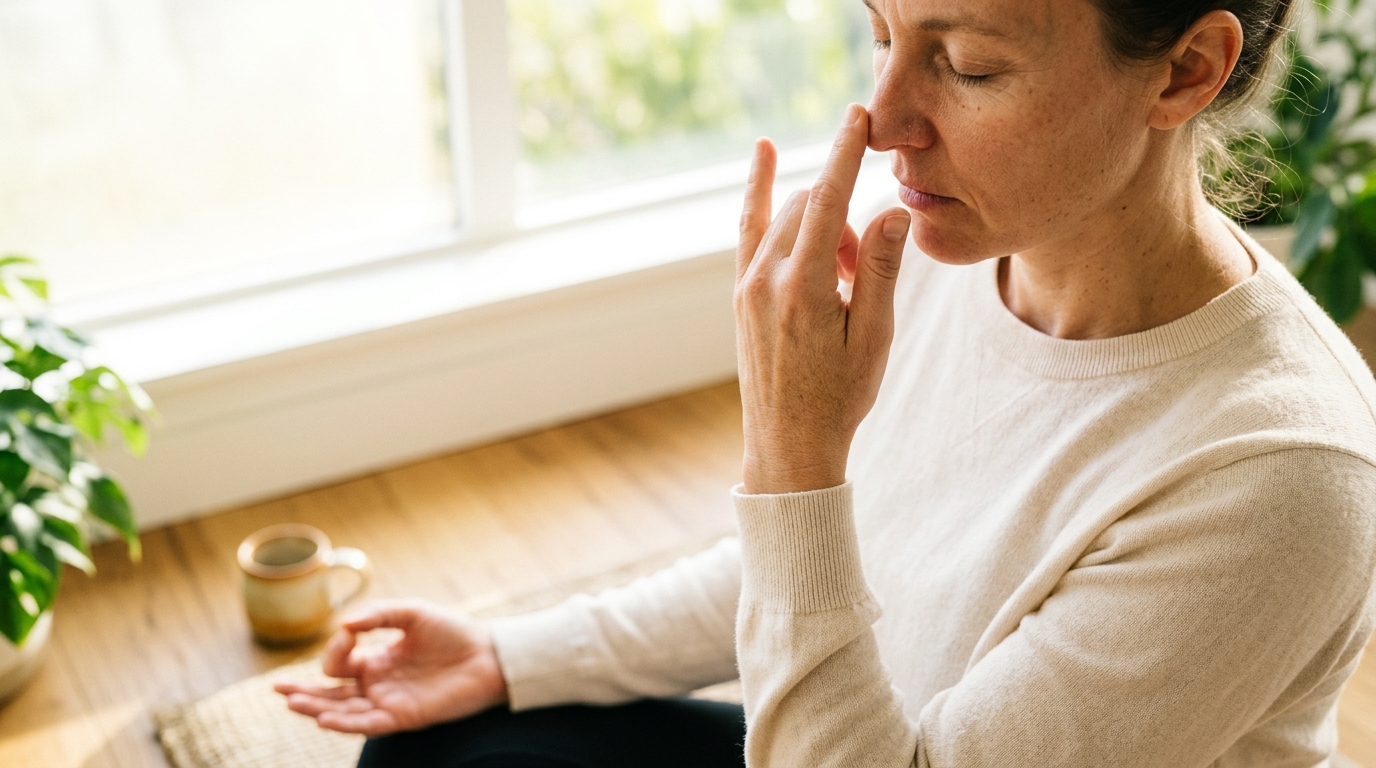
Beginner's Guide to Pranayama: Breathing Techniques That Actually Work
Pranayama is the ancient yogic practice of controlled breathing that directly regulates your nervous system, energy levels, and mental clarity. Rooted in Sanskrit - prana meaning life force and ayama meaning extension - pranayama gives you precise, repeatable tools to shift your physiology in minutes. This guide covers the five most effective techniques for beginners, how to practice them safely, and what results to expect.
Why Pranayama Works: The Science Behind the Breath
Your breath is the only autonomic function you can consciously control, which makes it a direct gateway to your nervous system. Slow, extended exhales activate the parasympathetic nervous system (the "rest and digest" state), while rapid, vigorous breathing stimulates the sympathetic nervous system (the "fight or flight" state). A 2025 study published in Cell Reports Medicine found that five minutes of cyclic sighing - a specific pranayama-adjacent technique - reduced anxiety scores by 44% compared to mindfulness meditation over a four-week period.
Pranayama works through three primary mechanisms:
- Carbon dioxide regulation: Slower breathing raises CO₂ tolerance, which paradoxically improves oxygen delivery to tissues.
- Vagal nerve stimulation: Extended exhales directly increase heart rate variability (HRV), a key marker of stress resilience.
- Diaphragmatic engagement: Full diaphragmatic breathing massages abdominal organs and reduces cortisol production.
The 5 Best Pranayama Techniques for Beginners
1. Nadi Shodhana (Alternate Nostril Breathing)
Nadi Shodhana is the single most recommended starting technique for new practitioners. It balances the left and right hemispheres of the brain and produces measurable calm within 3–5 minutes.
How to practice it:
- Sit comfortably with your spine straight. Rest your left hand on your knee.
- Bring your right hand to your face. Place your index and middle fingers between your eyebrows.
- Close your right nostril with your thumb. Inhale slowly through the left nostril for 4 counts.
- Close both nostrils. Hold for 4 counts.
- Release your thumb and exhale through the right nostril for 4 counts.
- Inhale through the right nostril for 4 counts. Hold 4. Exhale left 4. That's one full cycle.
- Complete 5–10 cycles to start.
2. Dirgha Pranayama (Three-Part Breath)
Dirgha is the foundational breath for all pranayama. It trains you to use your full lung capacity by filling three distinct sections - the belly, the ribcage, and the upper chest - in sequence. Most adults habitually use only 20–30% of their lung capacity in everyday breathing. Dirgha corrects that pattern in a single session.
How to practice it:
- Lie on your back or sit tall.
- Inhale first into the belly, letting it expand outward.
- Continue the inhale into the ribcage, feeling the ribs flare sideways.
- Complete the inhale by filling the upper chest, lifting the collarbones slightly.
- Exhale in reverse: chest deflates, ribs drop, belly draws in.
- Practice for 5 minutes daily for one week before adding other techniques.
3. Ujjayi (Victorious Breath)
Ujjayi is the breath you hear in most yoga classes - a soft, oceanic sound created by slightly constricting the back of the throat. It slows the breath to roughly 4–6 breaths per minute (compared to the average adult's 12–20), which produces immediate reductions in heart rate and mental chatter.
How to practice it:
- Inhale through your nose for 5 counts.
- As you exhale, slightly contract the back of your throat as if fogging a mirror - but keep your mouth closed.
- You should hear a soft "haaa" or ocean wave sound.
- Apply the same gentle constriction to the inhale once the exhale feels natural.
- Practice for 5–10 minutes during yoga or seated meditation.
4. Kapalabhati (Skull-Shining Breath)
Kapalabhati is an energizing technique that uses rapid, forceful exhales to clear the respiratory tract and stimulate alertness. It's the pranayama equivalent of a strong espresso - use it in the morning or when you need a focused energy boost, never before sleep.
How to practice it:
- Sit tall with your hands on your knees.
- Take a deep inhale to prepare.
- Sharply contract your lower belly inward to force a quick exhale through the nose.
- Let the inhale be passive - it happens automatically when you release the belly contraction.
- Aim for one pump per second. Start with 20 pumps, rest, then do 2–3 rounds.
Avoid Kapalabhati if you are: pregnant, experiencing high blood pressure, recovering from abdominal surgery, or currently dealing with acute anxiety or panic disorders.
5. Bhramari (Humming Bee Breath)
Bhramari involves making a humming sound on the exhale while blocking the ears with the thumbs. The internal vibration directly stimulates the vagus nerve and has been shown to lower blood pressure within a single 5-minute session. It's particularly effective for evening wind-down routines.
How to practice it:
- Sit comfortably. Plug your ears with your thumbs and rest your fingers lightly over your eyes and face.
- Take a full inhale through the nose.
- On the exhale, produce a smooth, steady humming sound - like the letter "M" held continuously.
- Feel the vibration in your skull, throat, and chest.
- Repeat 5–7 times.
Pranayama Techniques Compared: Quick-Reference Table
Use this comparison to choose the right technique for your goal:
Technique Best For Time of Day Difficulty Duration Nadi Shodhana Balance, anxiety relief Any time Beginner 5–10 min Dirgha Foundation building Any time Beginner 5 min Ujjayi Calm focus during yoga Morning/midday Beginner 5–10 min Kapalabhati Energy, mental clarity Morning only Intermediate 3–5 min Bhramari Sleep, stress relief Evening Beginner 5 minHow to Build a Daily Pranayama Practice
Consistency beats intensity every time. A 10-minute daily practice produces stronger results than a 60-minute session once a week. Here's a realistic starter schedule:
- Week 1–2: Practice Dirgha (Three-Part Breath) alone for 5 minutes each morning. Master the mechanics before adding complexity.
- Week 3–4: Add Nadi Shodhana for 5 minutes after your Dirgha practice.
- Month 2: Incorporate Ujjayi into any yoga or stretching routine. Add Bhramari in the evening.
- Month 3+: Introduce Kapalabhati in the morning. Experiment with longer ratios in Nadi Shodhana (e.g., 4:4:8 - inhale 4, hold 4, exhale 8).
Practice on an empty stomach or at least two hours after a large meal. Sit on a firm chair or cross-legged on the floor - never lie down except for Dirgha, as lying down promotes drowsiness and reduces diaphragmatic engagement.
Common Mistakes Beginners Make
- Forcing the breath: Pranayama should feel controlled but never strained. If you feel dizzy, return to natural breathing immediately.
- Skipping the foundation: Jumping straight to Kapalabhati without mastering Dirgha is the most common beginner error. Build the base first.
- Holding the breath too long: Breath retention (kumbhaka) is an advanced practice. Beginners should omit holds until the basic rhythms feel effortless.
- Practicing in a poor environment: Avoid practicing in polluted air, extreme cold, or immediately after strenuous exercise.
Frequently Asked Questions About Pranayama
How long does it take to feel results from pranayama?
Most beginners report measurable reductions in stress and improved sleep quality within 7–14 days of consistent daily practice. Physiological markers like resting heart rate and HRV typically improve within 4–6 weeks of 10-minute daily sessions.
Can I practice pranayama without knowing yoga?
Absolutely. Pranayama is an independent practice. You need no yoga posture knowledge - just a straight spine, a quiet space, and 10 minutes. Techniques like Nadi Shodhana and Bhramari are fully accessible to complete beginners with zero yoga background.
Is pranayama safe during pregnancy?
Gentle techniques like Dirgha (Three-Part Breath), Nadi Shodhana, and Bhramari are generally considered safe during pregnancy and can reduce pregnancy-related anxiety. Kapalabhati and any breath retention techniques are contraindicated during pregnancy. Always consult your healthcare provider before starting any new breathing practice during pregnancy.
What is the difference between pranayama and box breathing?
Box breathing (equal-ratio breathing at 4:4:4:4) is a Western-adapted breathwork technique used heavily in military and clinical stress protocols. Pranayama is the broader ancient system from which many modern breathwork methods derive. Box breathing shares the same underlying mechanism - vagal activation through rhythmic breath control - but pranayama encompasses a wider range of techniques, energetic intentions, and physiological targets than box breathing alone.
How many pranayama techniques should a beginner practice at once?
Start with one technique - Dirgha or Nadi Shodhana - and practice it exclusively for two full weeks. Adding a second technique too soon dilutes your attention and slows skill acquisition. By month two, practicing two to three complementary techniques in a single 15–20 minute session is both manageable and effective.
